


“I know from the perspective of industries that are comfortable with the status quo that change is concerning, but I believe that there are several innovations that will not come to be in this jurisdiction if we don’t recognize some of the modern challenges that we have.” – Senator Thom Tillis
Senator Thom Tillis
The full U.S. Senate Judiciary Committee held a hearing Tuesday, titled “From Genes to Machines: the Patent Eligibility Debate,” during which witnesses testified about the pros and cons of reforming U.S. patent eligibility law, with human genome patentability featuring as a key sticking point.
While the hearing became heated at times—mostly over the peripheral topic of drug pricing—witnesses and Committee members ultimately seemed willing to work together on language that might move the bill forward.
The witnesses included former U.S. Patent and Trademark Office (USPTO) Director Andrei Iancu, who is widely credited for helping to streamline the eligibility analysis at the Office with his 2019 Eligibility Guidance; Debra G.B. Leonard, M.D., Ph.D., Professor of Pathology and Laboratory Medicine Emerita at Robert Larner, M.D. College of Medicine, University of Vermont; Sue Peschin, President & CEO of the Alliance for Aging Research; and J. John Lee, Senior Director, Head of IP Policy at the Computer & Communications Industry Association (CCIA).
PEAR Primer
A key goal of the hearing was to debate the Patent Eligibility Restoration Act (PERA), which was last introduced in 2025 but has stalled in recent months. PERA 2025 would reset the law of patent eligibility in the United States to where it was before the U.S. Supreme Court’s rulings in Mayo Collaborative Services v. Prometheus Labs., Inc.566 U.S. 66 (2012) and Alice Corp. v. CLS Bank Int’l573 U.S. 208 (2014). Earlier versions of PERA would have also directly overruled the Supreme Court decision in Assoc. for Molecular Pathology v. Myriad Genetics569 U.S. 576 (2013), which held that isolated DNA is not patent eligible. However, PERA 2025 is slightly different than the bill introduced in 2023, at least as it relates to human genes.
PERA 2025 still says that unmodified human genes as they exist in the human body are not patent eligible, but prior versions of the bill said that isolation of genes was considered a modification. PERA 2025, however, leaves out the word “isolated” and says that “a human gene shall not be considered to be unmodified if that human gene is purified, enriched, or otherwise altered by human activity; or otherwise employed in a useful invention or discovery.” However, witnesses today suggested that language may be a distinction without a difference, and called for it to be further tweaked.
PERA 2025 still dismantles current judicial exceptions to eligibility by explicitly stating that eligibility for any useful process, machine, manufacture or composition of matter is “subject only to the exclusions in sub-section (b) and to the further conditions and requirements of this title.” The four exclusions contained in sub-section (b) are limited to:
- A mathematical formula that is not part of a claimed invention.
- A process that is substantially economic, financial, business, social, cultural or artistic, even though at least 1 step in the process refers to a machine or manufacture.
- A mental process performed solely in the human mind, or which occurs in nature wholly independent of any human activity.
- An unmodified human gene, as the gene exists in the human body.
- An unmodified natural material, as the material exists in nature.
While isolation of human genes does not appear to be enough to qualify as modification for purposes of conferring patent eligibility, PERA 2025 would specifically consider isolation of a “natural material” to be sufficient. Specifically, the bill says that a natural material would be considered modified and patent eligible if it is “isolated, purified, enriched, or otherwise altered by human activity; or otherwise employed in a useful invention or discovery.”
CCIA’s Lee noted that this seems like a conflict with the bill’s earlier language, which does not mention “isolated,” and Dr. Leonard commented that “purified is the same thing as isolated,” so in her view the bill would still essentially revert to pre-Myriad circumstances.
A new Section 4(b) of the bill also states that “pre- or post-solution activity by a computer (or other machine or manufacture) in claim language shall not be sufficient to confer patent eligibility on the claim if that computer (or other machine or manufacture) is not necessary to practically perform the invention.”
Thus, claims that merely add a computer as window dressing to the invention will be insufficient to confer patent eligibility.
Testimony
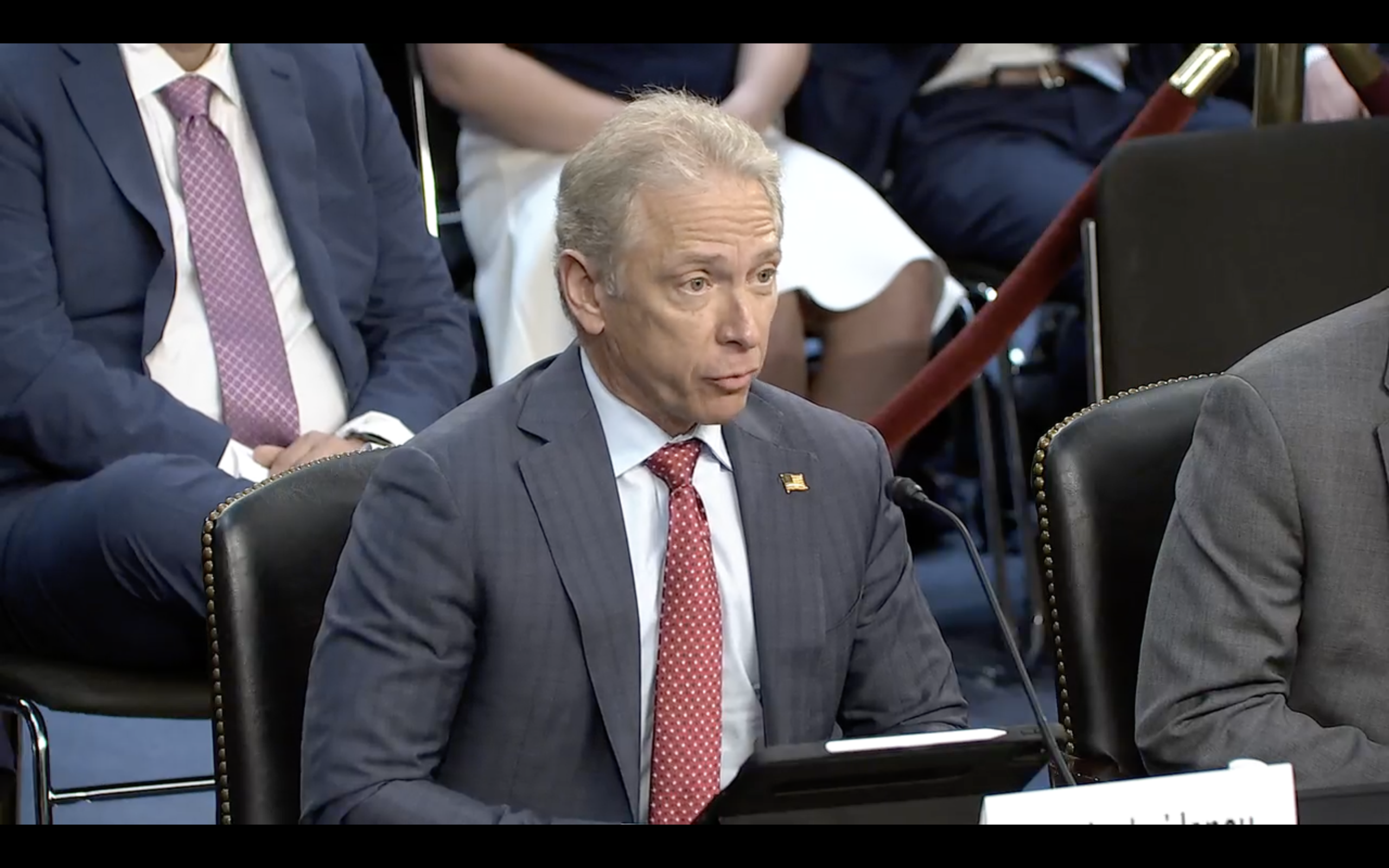
Andrei Iancu
Former USPTO Director Iancu reminded the Committee that “Congress has not meaningfully updated the basic statutory categories defining what kinds of innovations and technology may be patented since 1793.” The courts have thus taken it upon themselves to tailor the law as new technologies emerge, and the result is that entire areas of innovation, such as artificial intelligence and medical diagnostics, have become essentially excluded. “That’s a substantive problem that congress needs to fix,” Iancu said.
While Iancu’s 2019 eligibility guidance created more consistency for examiners and the Office—increasing the consistency of decisions by 44% in one year, according to Iancu—it ultimately merely synthesized court decisions in a way that was more understandable to examiners and applicants. Only Congress can resolve the substantive problems that currently exist, he explained.
But Lee disagreed that the sky is falling and called the current state of the law “cogent and consistent.” He said that patent eligibility decisions today are “remarkably reliable,” with one study that analyzed every eligibility case at the U.S. Court of Appeals for the Federal Circuit (CAFC) since the Alice decision showing 85% of the cases were affirmed. Lee also claimed that the USPTO issued 50,000 AI patents last year alone, thereby allegedly debunking the notion that AI technology is unpatentable.
Later in the hearing, Senator Chris Coons (D-DE) countered Lee’s data about consistency and predictability by saying he would argue that the decisions have been “consistently bad.”
Peschin discussed the effects of weak eligibility laws on the ground for her, especially in the area of medical diagnostics, pointing to the decision in Ariosa Diagnostics, Inc. v. Sequenom, Inc. as evidence of how dangerously restrictive the law has become. She explained in her written testimony:
“Sequenom developed a non-invasive prenatal test that could detect fetal abnormalities from a simple maternal blood sample, sparing mothers and babies the risks of invasive procedures like amniocentesis. It was a genuine scientific breakthrough. Yet the Federal Circuit invalidated the patents. Judge Richard Linn acknowledged in his concurrence that the invention was exactly the kind of advance the patent system is meant to encourage and protect. However, he was compelled to strike it down because of the Supreme Court’s broad language in the Mayo decision.”
Linn called on Congress in that concurrence to resolve the confusion.
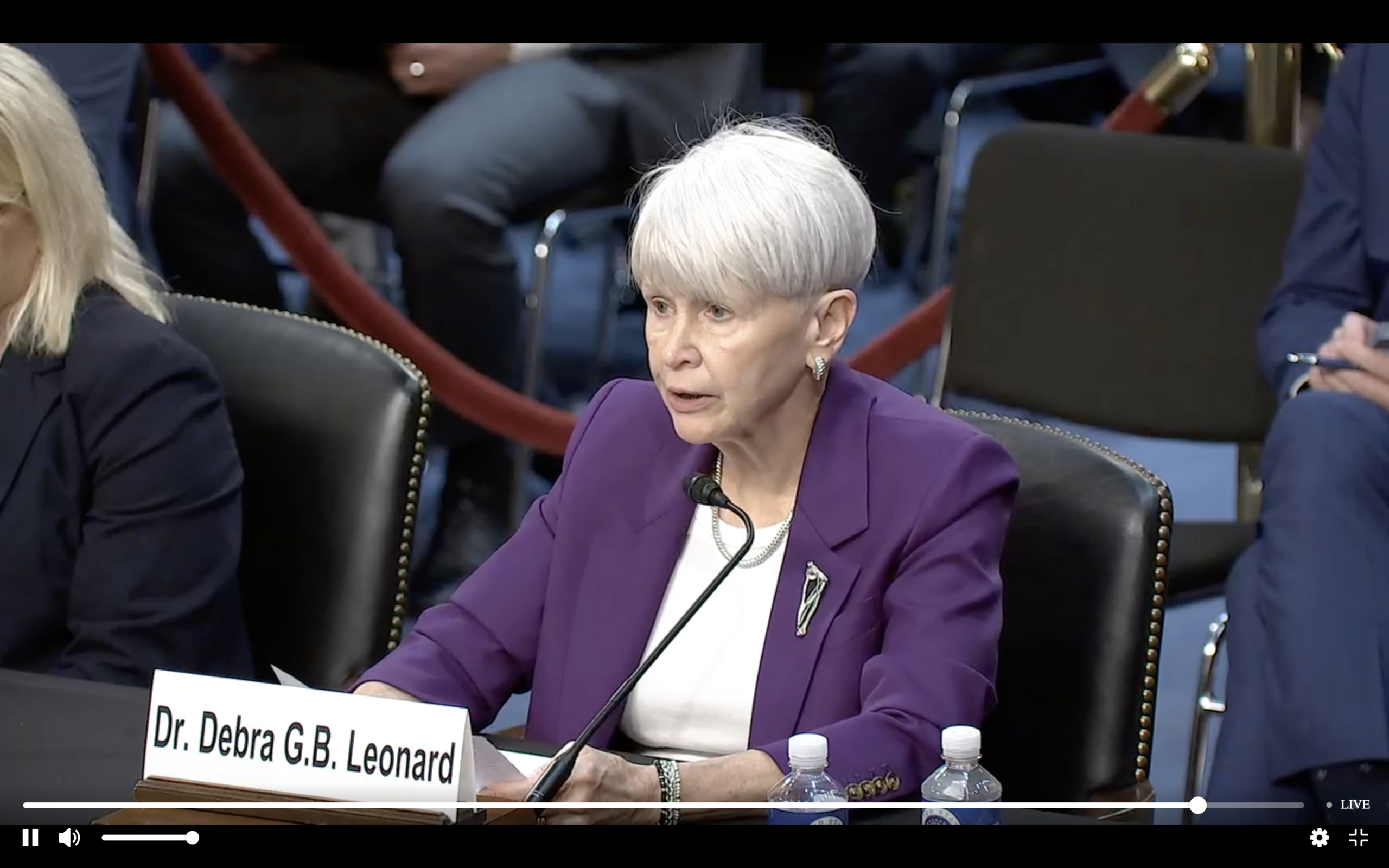 Finally, Dr. Leonard’s testimony gave the Committee perhaps most pause, as she described her fear of returning to a pre-Myriad world in which her lab had to stop performing four of the tests she was providing at the time due to gene patent enforcements, while the cost to patients for the other two, which she was able to license, went up significantly.
When some members of the Committee asked Leonard if a research exception in PERA might address her concerns, she explained that “I was stopped form doing clinical testing for patients; my research was not stopped.” She continued:
“What is not understood is that, as a pathologist, I can develop and validate genetic tests in my clinical laboratory…and perform that for patients. I don’t need a patent, I don’t have to license patents… that is what will stop…. There are 20-25,000 genes in the human genome, and if even a tenth of those are patented, then I have to go get licenses or royalty fees or rights to use that genetic information for my patients; and I became a physician to practice medicine, not to practice law.”
Leonard added that she has not seen real-life evidence of harm to medical diagnostic innovation since Myriad and would prefer for the law to remain as is.
Peschin and Committee members seemed sympathetic to Leonard’s arguments, though Iancu and others pointed out that the intent of PERA is to codify Myriadnot to overrule it. But Leonard said the current language would create instability for her and she promised to provide language that might actually codify Myriadin her view.
Peschin said she did not disagree that “someone like Dr. Leonard should be able to provide tests to her patients; but the inventor of those tests that devoted time and money should be able to license it to her in order to use it. The very fact that she is able to recreate it is due to the patent system and the transparency within the patent system.”
When Senator Josh Hawley (R-MO) took his turn at questioning, he diverted the hearing to a debate about U.S. drug pricing that Senators Thom Tillis (R-NC) and Coons argued was off-topic and out of line. But before Tillis cut off the line of questioning, Iancu answered by saying that “the cost of a drug that’s not invented and brought to market is basically infinite,” and said the problem of pricing has to do with “tremendous freeriding overseas on American innovation” and that we should focus on forcing trading partners to “pay their fair share.”
The latter is what President Donald Trump’s Executive Order on Most Favored Nations Prescription Drug Pricing was meant to address, but the policy has faced criticism and is seen as largely ineffective so far.
Tillis, who is retiring after this term, ultimately asked stakeholders to work together to make the bill better, and specifically tasked Dr. Leonard with sharing her preferred language.
“I know from the perspective of industries that are comfortable with the status quo that change is concerning, but I believe that there are several innovations that will not come to be in this jurisdiction if we don’t recognize some of the modern challenges that we have,” Tillis explained.
He continued: “I believe in my heart of hearts we’re moving in the right direction. Let’s be innovative ourselves and try to get the language right.”